


31
Mar
13:00
Lorem ipsum dolor sit amet consectetur. Aliquam pellentesque et vel fames id nunc gravida et.

Data Agents are GenAI-powered systems that independently analyze, process, and act on data. They allow employees to interact with data in natural language – without technical knowledge, query languages, or time-consuming research.
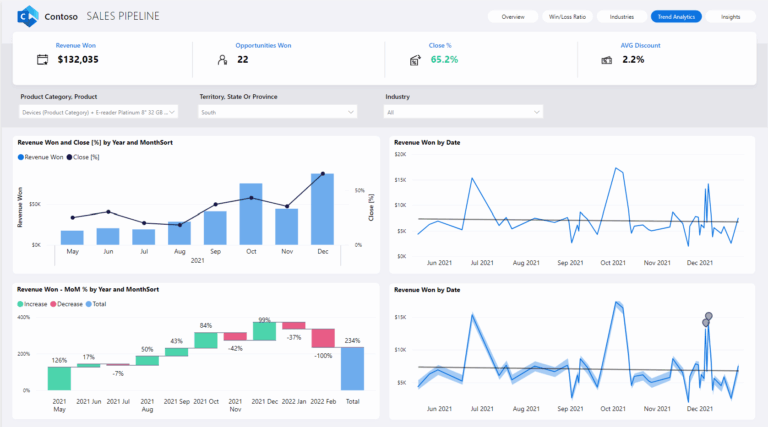
Instead of static dashboards, Data Agents provide a dynamic, dialogue-based approach to data-driven decision-making. This makes data immediately usable, flexibly combinable, and accessible to all roles within the organization.
Unlike Data Agents, which retrieve data, trigger workflows, and automate operational tasks, Generative AI focuses on creating and transforming content. It generates text, images, code, or analyses, supporting teams in marketing, product development, operations, or customer service.
Generative AI enables the rapid creation of high-quality content, accelerates processes, and automates repetitive tasks – from text production and concept development to technical assistance. Data Agents and Generative AI complement each other perfectly: Data Agents orchestrate processes, while Generative AI delivers the content.


As an official Microsoft Data & AI Solutions Partner, we help companies strategically unlock the potential of Generative AI – securely, at scale, and seamlessly integrated into their existing Microsoft environment.
Together, we evaluate suitable use cases, analyze process potentials, and develop practical approaches to simplify workflows, expand automation, and reduce costs. We work iteratively: quickly testing initial prototypes, refining solutions based on your feedback, and supporting you through the productive deployment and ongoing development of your AI application.
Together, we determine how Data Agents & GenAI can create real value. We capture needs, assess opportunities and risks, and define concrete use cases. At the same time, we review your data and IT landscape.
Based on the analysis, we develop the technical and functional concept for your Data Agent or GenAI application. We evaluate existing models, fine-tuning options, rule-based approaches, or custom architectures – always considering performance, cost, scalability, and security.
We identify high-potential use cases and develop functional prototypes (MVPs). These provide quick results, enable realistic testing, and create clear decision-making foundations for rollouts or further development.
We seamlessly integrate the solution into your systems and workflows. Training, documentation, and feedback loops support the rollout. Upon request, we manage operation, monitoring, and continuous optimization.
The necessary data processes are automated, eliminating the manual compilation of data for reporting. The fixed costs for the proposed solution are very attractive.
Cross-tool analyses (e.g., data on tenant surveys and income statements, sustainability data, valuation data, etc.) for different target groups.
The existing tool landscape can be retained, and well-established workflows for data collection and maintenance remain unchanged.
The environment can be flexibly expanded and adapted to new or changing needs at any time.
The solution can be implemented step by step, for example, starting with an initial (smaller) use case. This minimizes risks and allows the cost-benefit ratio to be better assessed.
Full access to your data at all times, with no dependency on third parties.
Generative AI focuses on creating new content such as text, images, code, or audio. The model is trained on large datasets and can then independently generate high-quality results through natural language (prompts).
Data Agents go a step further: they use GenAI models to perform actions, retrieve data, trigger workflows, or control systems. While Generative AI produces content, a Data Agent combines content generation with process logic and operational control.
In Microsoft Fabric, Data Agents can be seamlessly integrated into data processes. They can automatically trigger workflows and interact directly with pipelines, lakehouse structures, or business applications. By combining Fabric, Copilot, and the Data Activator, Data Agents can monitor and analyze data and independently initiate operational actions – entirely within the Microsoft platform and in compliance with high security and governance standards.
Data agents are fundamentally changing the way employees work with data. Instead of looking for information in reports or static dashboards, questions can be asked directly in natural language – for example in Microsoft Teams: “How did sales develop last month?”
The Data Agent immediately provides the appropriate evaluation without the need for technical knowledge or manual research.
Furthermore, Data Agents can retrieve data from various systems, combine it, and automatically derive actions or trigger workflows. This leads to faster decision-making, more efficient processes, and less repetitive work.
Data agents combine generative AI with data connection and process logic. They understand natural language, translate a question or instruction into technical steps and execute these independently. To do this, they access company data.
A Data Agent operates in the background through several steps:
In Microsoft Fabric, Data Agents can also be directly integrated into data pipelines and real-time events. They respond to data changes via the Data Activator, automatically trigger follow-up actions, and interact conversationally through tools like Teams or Copilot.
Yes. Data Agents can be integrated so that you can interact with them directly in Microsoft Teams using natural language. You simply ask a question like, “How did sales develop last month?” – the agent retrieves the relevant data, analyzes it, and provides an immediate, understandable answer.
Through Microsoft Teams, Data Agents can also trigger workflows, generate reports, send notifications, or initiate actions in other systems. This turns Teams into a central interface for data-driven decision-making in everyday work.


Seilerstrasse 4
3011 Bern
Badenerstrasse 120
8004 Zürich
Subscribe to our newsletter for the latest updates on real estate investments.